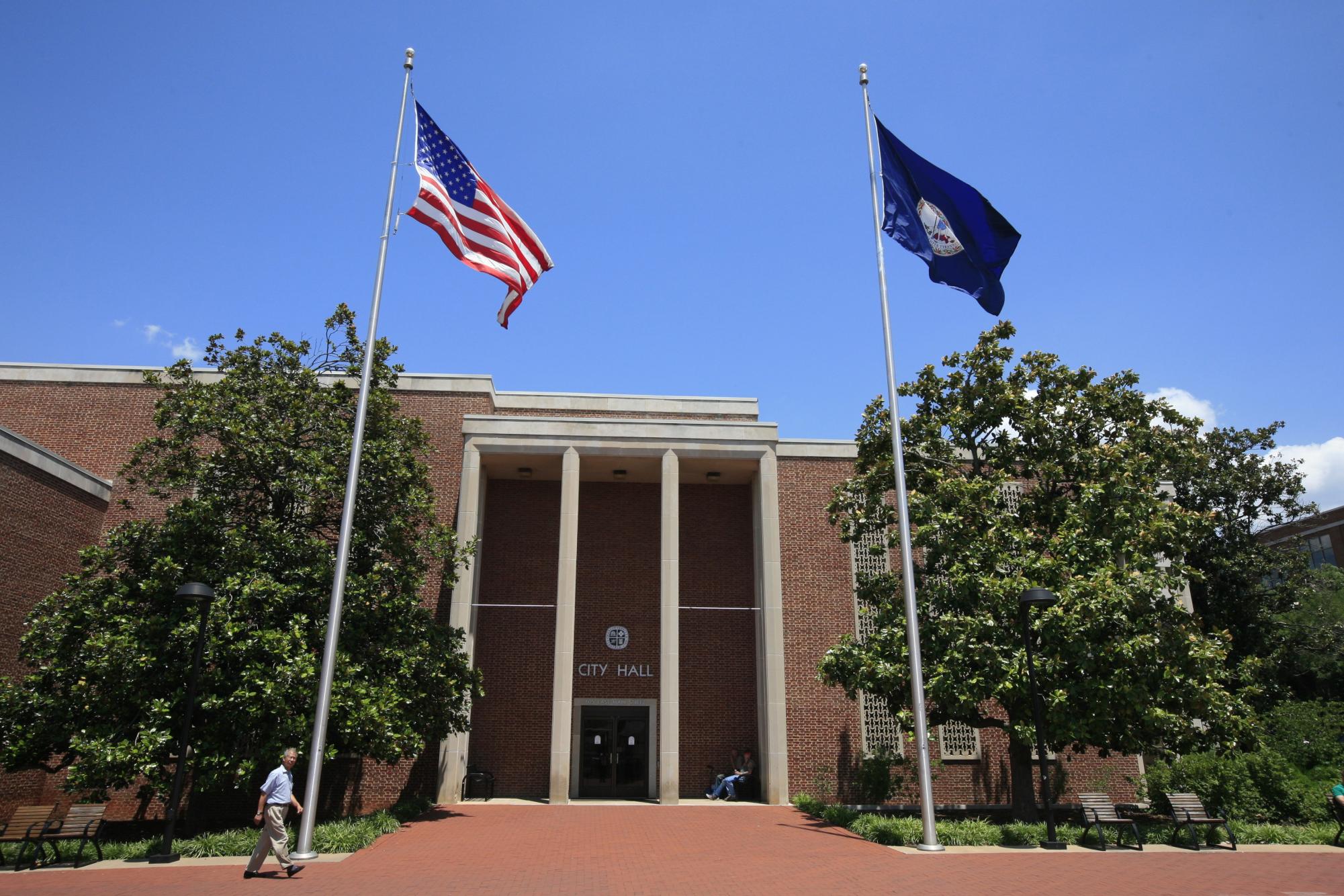
Once school resource officers return to CHS in August, most of us will have regular contact with the Charlottesville Police Department. But not many students know that in a small room in City Hall, a group of volunteers oversees the police department: the Police Civilian Oversight Board.
The community-led board “aims to promote fair and effective policing and to protect the civil and constitutional rights of the people of Charlottesville”, according to the CPD website. A rotating cast of seven board members meets on the second Thursday of every month. At those meetings, members review recent issues with the police department and work on continuing projects.
Local activists and residents originally created the Police Civilian Oversight Board in 2017. The Charlottesville Police Department already had long-term issues with racial bias and unfair punishment, with the city itself releasing a study in 2020 that found that Black residents are overrepresented and punished more severely in the local criminal justice system. However, after the infamous Unite the Right rally, calls to reform the police department got even louder. The traumatic event devastated Charlottesville, and many community members criticized the police department sending officers to escort KKK members through the city and not protecting residents more.
On the one-year anniversary of the Unite the Right rally, Jalane Schmidt, a UVA professor and organizer for Black Lives Matter, gave an interview about her experience that day. “The police stood by while marauding Nazis assaulted members of my community,” she told CNN. “I already distrusted the police, because they’re too often not held accountable for their assaults on Black civilians. But the way I see it, police aided and abetted white supremacy.”
Schmidt and many other community members, such as activist Rosia Parker and civil rights attorney Jeff Fogel, pushed for a civilian review board to investigate complaints against the police department. An early precursor called the Police Civilian Review Board was then established. The board spent their first few meetings writing bylaws for their own work with the police department. Despite a struggle with City Council to approve those bylaws in 2018, it eventually grew into the Police Civilian Oversight Board.
Seven community members run the board in monthly meetings. Two seats on the board are reserved for representatives who live in public housing or come from historically disadvantaged communities, and two more are set aside for citizens who work with racial or social justice organizations. According to Charlottesville Tomorrow, the seven representatives meet to “review existing policies and policing practices, make suggestions on improvements, audit internal police investigations and, when necessary, launch their own”.
However, the Police Civilian Oversight Board is still facing huge challenges. The current model, which asks the Board to do everything without accounting for time, financial, and legal constraints, simply doesn’t work, as current and former leadership told Charlottesville Tomorrow. That workload is even more overwhelming because board members are unpaid volunteers, who spend their free time serving the community this way in addition to full-time jobs.
The police department’s red tape has also restricted the board’s freedom. Until 2024, representatives didn’t have the power to request police records, which they need to conduct any full investigation into an officer’s conduct. And while the board can ask a CPD staff member to testify, the officer can’t be forced to attend meetings or incriminate themselves in a possible criminal investigation.
The National Association for Civilian Oversight of Law (NACOLE) publishes annual reports about necessary pillars for effective police oversight boards. This year, they listed Unfettered Access to Records, Access to Law Enforcement Staff, and Full Cooperation as crucial resources. Clearly, the PCOB has struggled to get any of them without the police department’s full support. Cities like Annapolis and Raleigh, which are similar to Charlottesville in location and size, are also facing difficulties with civilian police oversight because of legal gray areas.
However, the future looks brighter for the Police Civilian Oversight Board. Last March, the police department finally started to plan out how PCOB hearings will work, as publicly available city records report. A few months later, Charlottesville City Council held a joint September meeting with the Board to discuss changing ordinances to make the Board’s duties more clear and achievable. Collaboration with the Charlottesville Office of Human Rights on relevant investigations is also in the cards. Despite years of struggling with red tape and scarce resources, the Police Civilian Oversight Board is moving closer to its goal of making the Charlottesville Police Department fairer for everyone in the city.