On Tuesday November 4th, Virginians all across the Commonwealth cast their votes for the Governor, Lieutenant Governor, and Attorney General. In the end, Democrats prevailed, with members of their party winning all three elections. This offered a sharp rebuke to President Trump’s first nine months in office and pointed to a path forward for the embattled Democratic Party, who was solidly beaten in all seven swing states in the 2024 presidential election.
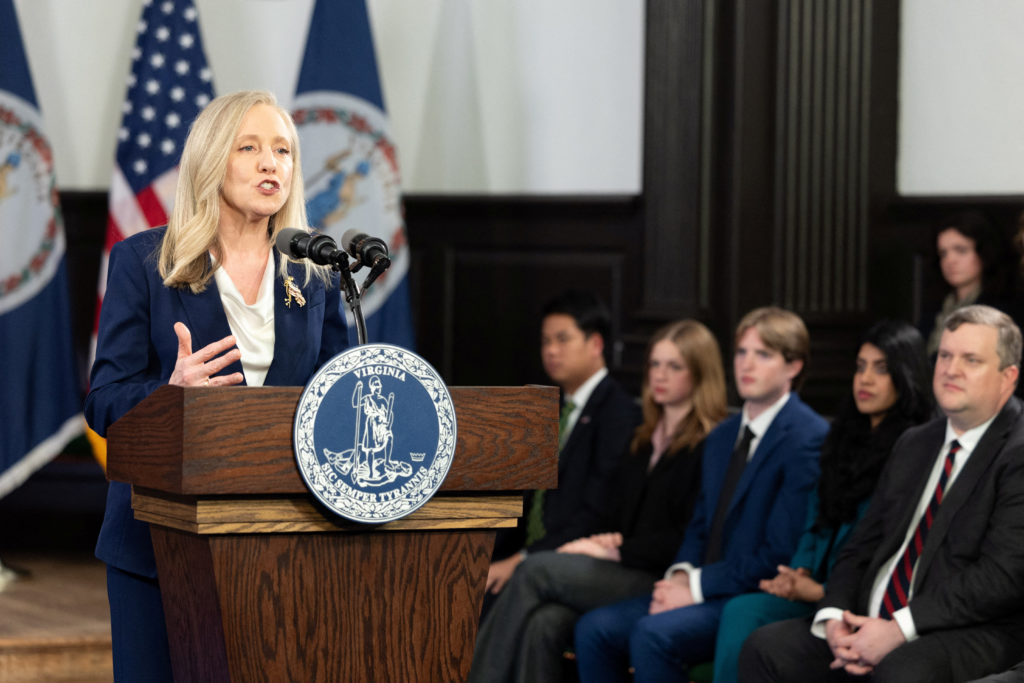
The Democratic candidate for governor, Abigail Spanberger, beat Winsome Earle-Sears, the Republican candidate, by fourteen points in a near-landslide. She took 57 percent of the vote compared to Earle-Sears’ 43 percent. The odds had been stacked for Spanberger since the beginning: only once since 1977 has Virginia elected a governor from the same party as the President. Furthermore, Virginia is home to around 320,000 federal workers, many of whom were hit hard by the Trump administration’s numerous layoffs.
Spanberger attended the University of Virginia, where she majored in French and foreign affairs. She later earned her MBA from Purdue University before working multiple jobs; first as an English teacher, then a postal inspector, and then a CIA case officer. She was elected to the House of Representatives in 2018 and served until this year. While in the House, she was a member of the “Mod Squad” (along with New Jersey’s governor-elect Mikie Sherrill), a sort of foil to the progressive “Squad” led by New York representative Alexandria Ocasio-Cortez.
Her campaign similarly portrayed her as a pragmatic centrist. She emphasized affordability, strengthening Virginia’s schools, and standing up to Donald Trump. “Abigail Spanberger is running for Governor to get things done for Virginia,” her campaign website read. On the other hand, Earle-Sears’ campaign focused on trans kids in girls’ sports, lower costs for energy, and being tough on crime. She aligned herself closely with Donald Trump, whose presence loomed over the governor race. Trump, for his part, gave Earle-Sears a meager endorsement a week before the polls opened.
Democrats Ghazala Hashmi and Jay Jones were also victorious in their bids for lieutenant governor and attorney general, respectively. Hashmi defeated John Reid, a gay Republican, with 55% of the vote. Her win is historic: she will be the first Muslim woman to take statewide office in Virginia. Jones’ prospects were unlikely before the election due to a texting scandal. He detailed hypothetically killing a Republican official in texts that were leaked a few weeks before Election Day. Nevertheless, he won with 53% of the vote, beating incumbent Jason Miyares by 6 points.
What will these victories bring for Virginians, and from a closer lens, for us in Charlottesville? Spanberger spoke often of increasing jobs, affordability, and reproductive rights in her campaign. She promised to lower prescription drug costs, reach across the political aisle to extend fair housing protections, and sign legislation to protect the right to abortion in Virginia. A central part of her campaign was strengthening Virginia’s public education system, from K-12 schools to colleges and universities.
As part of her Strengthening Virginia Schools Plan, Spanberger said she would end Youngkin’s practice of giving low-income families vouchers – worth up to $5,000 – to attend private school. Critics say this practice takes money away from already-underfunded public schools and gives it to wealthier private schools. She also underscored the importance of ending Virginia’s chronic teacher shortage in an op-ed for Black Virginia News in August: “Instead of making it harder for schools to find and hire qualified educators, we need to raise teacher salaries and create pathways to bring more Virginians into the profession.”
Spanberger also opposes Youngkin’s policies regarding LGBTQ+ students in public schools. These policies, which Youngkin rolled out in 2022, said that students must only use school facilities associated with their biological sex and are only able to play on sports teams pertaining to their biological sex. They also included that, without an official court order, minors could not be referred to by a name or set of pronouns that is different from what is on their official record. Even if the student did get this official legal document, teachers and administrators didn’t have to use their chosen name and pronouns if they believed doing so “would violate their constitutionally protected rights.” Spanberger said she would end Youngkin’s executive order that put these policies in place.
As governor, her influence in public education extends all the way to colleges and universities. In Virginia’s public university system, the governor appoints board members at each campus. These board members oversee most functions of each university, such as budgets and policies. UVA’s Youngkin-appointed Board of Visitors, along with the Trump administration’s Department of Justice, recently ousted former University President Jim Ryan over his advocacy for DEI (Diversity, Equity, and Inclusion) within the university. This is more than an isolated incident; in fact, many universities have been facing a conservative push against perceived liberal bias.
Board members serve four-year terms. When Spanberger steps into office, she has the opportunity to replace members of the current conservative board whose terms are up with members she chooses. This would likely consist of liberal-leaning people who seek to undo many policies the Youngkin-appointed Board put in place. They would also provide a deterrent to Trump’s conservative push in Virginia’s public universities. This is not only applicable to UVA, whose workings we see so closely because of our proximity, but to every public university in Virginia.
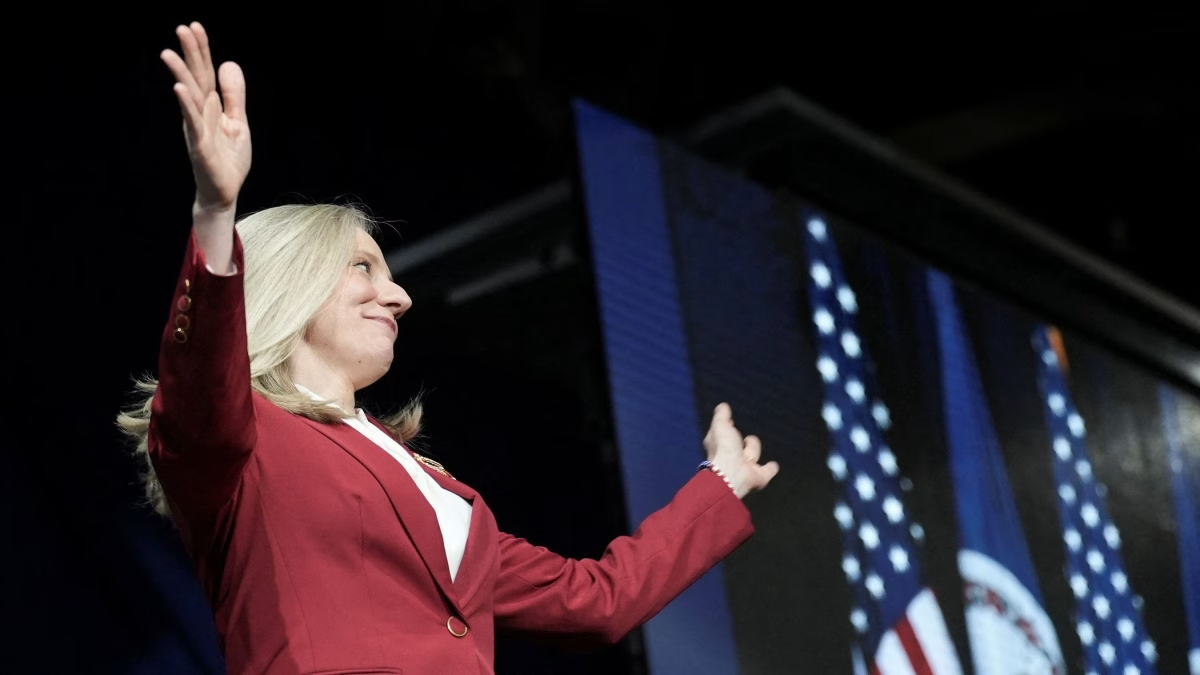
Spanberger’s campaign underscored rationalism and centrism to the very end. “My fellow Virginians. Tonight, we sent a message — we sent a message to every corner of the Commonwealth; a message to our neighbors and our fellow Americans across the country; we sent a message to the whole world — that in 2025, Virginia chose pragmatism over partisanship. We chose our Commonwealth over chaos,” she announced in her victory speech on November 4th.
Her win is historical, as well: she will be Virginia’s first ever female governor. “Just a few minutes ago, Adam [her husband] said to our daughters: “Your mom is going to be the Governor of Virginia.’ I can guarantee those words have never been spoken in Virginia before,” she continued in her speech. After this proclamation, though, she circled back to her original, fundamental message of getting things done for Virginians: “So, now that the campaign is over — the real work begins.”